
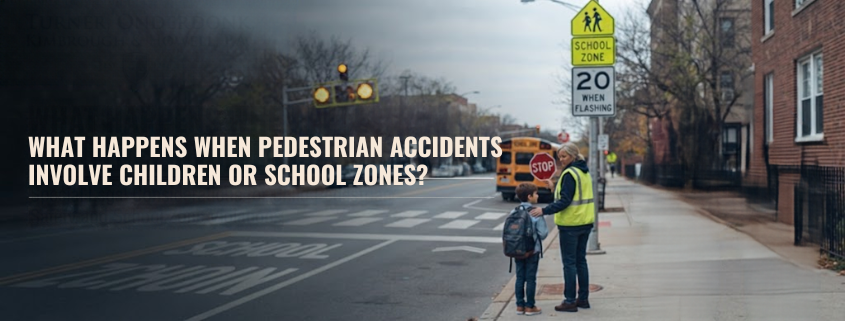
What Happens When Pedestrian Accidents Involve Children or School Zones?
Receiving a phone call that your child has been struck by a vehicle is every parent’s absolute worst nightmare. A peaceful afternoon walk near a local park in Bay Minette or a hurried morning drop-off in a Mobile school zone can turn into a devastating tragedy in a matter of seconds.
Because children have smaller physical frames, their bodies absorb the blunt force impact of a moving vehicle entirely differently than adults do. A crash that might cause a minor fracture in an adult often results in catastrophic brain injuries, permanent growth plate damage, and lifelong physical disability for a young child. When an inattentive motorist fails to yield the right-of-way, the legal process that follows must prioritize the long-term well-being of the young victim.
What Duty Do Alabama Drivers Owe to Children on the Road?
Under Alabama Code Section 32-5A-213, drivers must exercise due care to avoid colliding with any pedestrian. The statute specifically mandates that motorists take proper precaution when observing a child near the roadway, recognizing that children act unpredictably and lack the traffic awareness of adult pedestrians.
The legal standard dictating how motorists must behave around pedestrians is clearly established within Alabama Code Section 32-5A-213. This traffic statute imposes a non-negotiable obligation on every driver operating a motor vehicle to exercise due care to prevent striking individuals walking near the street.
Crucially, the law places a heightened burden on drivers when children are present. The statute explicitly requires that every driver shall exercise proper precaution upon observing any child or any obviously confused, incapacitated, or intoxicated person. This legal distinction exists because state lawmakers acknowledge a fundamental reality of human development: children are inherently unpredictable.
A motorist driving through a residential neighborhood in Foley or near a busy playground in Robertsdale cannot rely on the assumption that a five-year-old will strictly obey crosswalk signals. A driver’s heightened duty of care requires them to anticipate sudden movements, such as:
- A toddler suddenly chasing a loose ball into the street.
- A young student unexpectedly darting between parked cars to reach a waiting school bus.
- A child slipping off a sidewalk curb and falling into the traffic lane.
If an adult pedestrian steps into oncoming traffic outside of a marked crosswalk, the driver might argue they had no time to react. However, when a child is visible on the side of the road, the driver is legally required to reduce their speed, increase their stopping distance, and prepare for erratic behavior. Failing to adapt to the visible presence of a child constitutes a severe breach of a driver’s legal duty.
How Does The “Tender Years Doctrine” Affect Contributory Negligence?
Alabama follows a strict pure contributory negligence rule, but the tender years doctrine protects young victims. Under state law, children under seven are conclusively presumed incapable of contributory negligence. This means an insurance company cannot blame a young child for a school zone pedestrian accident to avoid paying damages.
Alabama enforces one of the most unforgiving civil liability standards in the country. Under the pure contributory negligence doctrine, if an injured adult is found to be even one percent at fault for causing a collision, they are completely barred from recovering any financial compensation whatsoever. Insurance companies aggressively weaponize this rule, searching for any minor excuse to shift a fraction of the blame onto the victim.
Fortunately, the courts recognize that young children cannot comprehend the complex dangers of traffic. To shield minors from this harsh standard, Alabama applies the tender years doctrine. This legal framework evaluates a child’s capacity for negligence based strictly on their age bracket:
- Children Under Age 7: Minors under the age of seven are legally considered incapable of contributory negligence. The presumption is absolute. An insurance adjuster cannot argue that a six-year-old was partially at fault for running into the street.
- Children Ages 7 to 14: Minors in this bracket are rebuttably presumed incapable of contributory negligence. The defense must prove that the specific child possessed the exceptional maturity, intelligence, and experience to understand the danger they placed themselves in.
- Children Ages 14 and Older: Teenagers fourteen and older are generally held to the same standard of care as a responsible adult, meaning they can be barred from recovery if they are found partially at fault for the accident.
By leveraging the tender years doctrine, our legal team effectively neutralizes defense arguments that attempt to blame a severely injured kindergartener for an inattentive driver’s reckless actions.
Are School Zone Speed Limits Strictly Enforced in Alabama?
School zone speed limits are strictly enforced across Alabama to protect students during arrival and dismissal times. When a motorist ignores flashing school zone lights or posted speed reductions and strikes a child, that documented traffic violation serves as powerful evidence of negligence in a personal injury lawsuit.
School zones are designed to force traffic to a crawling pace precisely when hundreds of distracted, energetic children are congregating near roadways. Across the Baldwin County Public Schools district and the Mobile County school system, local municipalities establish highly visible speed reduction zones, often limiting drivers to fifteen or twenty miles per hour during designated hours.
Unfortunately, hurried commuters frequently view these speed reductions as inconvenient suggestions rather than absolute mandates. A driver travelling thirty-five miles per hour through an active school zone requires nearly double the stopping distance of a vehicle travelling at the posted fifteen-mile-per-hour limit. When a speeding driver strikes a student in a crosswalk, the resulting physical injuries are exponentially more severe.
If a police officer issues a traffic citation to the at-fault driver for violating a school zone speed limit, passing a stopped school bus, or ignoring a crossing guard’s whistle, that citation provides an enormous advantage in civil court. Proving that the driver committed a statutory traffic violation establishes negligence per se, shifting the focus entirely onto the extent of the child’s injuries rather than debating liability.
Who Can Be Held Liable for a School Zone Pedestrian Crash?
While the distracted or speeding driver is typically the primary defendant in a school zone pedestrian crash, other parties might share legal liability. This can include crossing guards who fail to manage traffic safely or motorists who illegally pass stopped school buses loading or unloading students.
Determining fault after a pedestrian collision requires a thorough investigation of the crash scene and a detailed review of the events leading up to the impact. The driver whose vehicle physically struck the child is almost always named as the primary defendant. In modern school pick-up lines, distracted driving—particularly texting behind the wheel or scrolling through a phone while inching forward—remains the leading cause of low-speed pedestrian impacts.
However, comprehensive legal representation involves identifying every party whose negligence contributed to the tragedy. Additional liable parties may include:
- Aggressive Motorists: Drivers who illegally swerve around stopped school buses with extended stop arms actively endanger children crossing the street.
- Municipal Entities: If an intersection lacks proper school zone signage, suffers from malfunctioning traffic lights, or features faded crosswalk paint, the local city or county government might bear partial responsibility for failing to maintain a safe roadway.
- Negligent Supervisors: In rare circumstances, if a school employee or hired crossing guard completely abandons their post or actively waves a child into oncoming traffic, third-party liability may apply.
Uncovering all potential avenues of liability ensures that the severely injured child has access to the maximum amount of insurance coverage available to fund their pediatric medical care.
How Does an Insurance Company Evaluate a Child’s Pedestrian Injuries?
Insurance companies evaluate a child’s pedestrian injuries by analyzing medical records, the severity of the physical trauma, and the anticipated impact on their development. Adjusters often try to minimize the payout, making it vital to present detailed medical evidence showing how the injuries will affect the child’s future.
Corporate insurance adjusters prioritize protecting their profit margins over compensating injured victims. When a child is involved in a severe collision, adjusters frequently deploy tactics designed to downplay the long-term severity of the trauma. They often argue that children are naturally resilient and heal much faster than adults, attempting to offer a minimal settlement before the true extent of the damage is known.
In reality, pediatric injuries carry profound long-term complications that do not apply to adult victims. For example, a fracture affecting a child’s growth plate can cause the bone to stop growing entirely or grow at a crooked angle, requiring multiple corrective surgeries as the child enters adolescence. Similarly, traumatic brain injuries sustained during early childhood can result in severe cognitive delays, learning disabilities, and personality changes that may not become fully apparent for several years.
Because the true cost of a child’s injury may remain hidden for years, accepting a fast, early settlement from an insurance company is incredibly dangerous. Once a settlement is signed, the parents cannot return to the insurance company and demand more money if the child requires unexpected physical therapy three years later. Thoroughly evaluating the claim requires patience and extensive consultations with pediatric medical professionals.
What Compensation Is Available for an Injured Child Pedestrian?
An injured child pedestrian in Alabama can recover both economic and non-economic damages. Financial compensation typically covers emergency hospital bills, future pediatric rehabilitation, physical pain and suffering, emotional trauma, and the long-term impact of permanent physical disabilities caused by the motor vehicle collision.
When a negligent driver causes a child to suffer, the civil justice system provides a mechanism to make the family whole again through financial compensation. A well-structured personal injury claim demands recovery for both the immediate financial burdens placed upon the parents and the personal suffering endured by the child.
Economic damages represent the objective, measurable financial losses caused by the crash. This includes the initial emergency room transport to a trauma center in Mobile, surgical intervention costs, prescription medications, specialized pediatric physical therapy, and the cost of any necessary mobility equipment. If the child’s injuries result in permanent disability that will ultimately reduce their ability to earn a living as an adult, those future lost wages are also compensable.
Non-economic damages compensate the minor for the subjective, invisible wounds of the accident. This includes physical pain and suffering, loss of enjoyment of life, and severe emotional distress. Many children develop intense anxiety, nightmares, or post-traumatic stress disorder (PTSD) following a violent pedestrian impact, leaving them terrified of walking near roads or riding in cars. Juries and insurance adjusters must account for this severe disruption to the child’s emotional development.
How Long Do You Have to File a Lawsuit for a Minor in Alabama?
The standard Alabama personal injury statute of limitations is two years, but Alabama Code Section 6-2-8 allows for the tolling of a minor’s claim. A child generally has until their twenty-first birthday to file a lawsuit, although parents must file claims for incurred medical expenses much sooner. For adult plaintiffs, the state heavily enforces a strict two-year statute of limitations for filing a personal injury lawsuit.
However, the legal system recognizes that a minor cannot legally hire an attorney or file a lawsuit on their own behalf. To protect their rights, Alabama Code Section 6-2-8 tolls, or pauses, the statute of limitations for individuals who are under the age of nineteen at the time the injury occurs.
Under this tolling provision, the injured child is granted up to three years after reaching the legal age of majority (nineteen years old) to formally commence an action. This effectively gives the child until their twenty-second birthday to pursue their personal claim for pain, suffering, and permanent disability.
However, this extended timeline carries a massive, often misunderstood legal trap. The claim for the child’s past medical bills legally belongs to the parents, not the minor. The parents’ claim for financial reimbursement is strictly governed by the standard two-year statute of limitations. If the parents wait five years to speak with a lawyer, they will completely forfeit their right to recover the massive hospital bills they already paid, even though the child’s independent claim remains valid.
Why Do You Need an Alabama Pedestrian Accident Attorney for Your Child’s Case?
Hiring a knowledgeable Alabama personal injury attorney protects your family after a devastating crash. At Turner, Onderdonk, Kimbrough & Howell, P.A., our legal team investigates school zone collisions, counters unfair insurance adjuster tactics, and fights to secure the financial resources required for your child’s long-term medical recovery.
When you are spending every waking hour sitting in a hospital room worrying about your child’s physical recovery, you cannot simultaneously fight a massive insurance corporation. The defense adjusters rely on exhausted, overwhelmed parents accepting low settlement offers just to make the process end. You need a strong legal advocate to aggressively protect your family’s financial future.
At Turner, Onderdonk, Kimbrough & Howell, P.A., our experienced attorneys understand the complex medical and legal hurdles involved in pediatric injury cases. We move rapidly to preserve traffic camera footage, locate eyewitnesses, secure police reports, and consult with leading medical professionals to build an overwhelming case for maximum compensation. We serve clients across Southwest Alabama, including Mobile, Baldwin County, Bay Minette, Foley, and Robertsdale.
If your child has been injured by a careless driver, please contact us today at (251) 336-3411 to schedule a completely free, confidential consultation.
Frequently Asked Questions
Can a driver be liable if a child darted out into the street?
Yes, a driver can still be held liable even if a child darted into the road. Motorists bear a heightened statutory duty to exercise proper precaution when they observe children near a street because young pedestrians act impulsively. If a driver was speeding or distracted when the child entered the road, their failure to react appropriately establishes negligence.
What should I do immediately after my child is hit by a car?
Your immediate priority is securing emergency medical attention by calling 911 and ensuring a formal police report is generated at the scene. Avoid discussing fault with the driver or their insurance company, and photograph the vehicle’s position, the crosswalk, and any visible skid marks if you can safely do so. Contact a personal injury attorney as soon as your child’s medical condition stabilizes.
Does our own auto insurance cover my child as a pedestrian?
Yes, your own auto insurance policy may provide vital coverage if the at-fault driver fled the scene or lacks sufficient liability insurance. Uninsured/Underinsured Motorist (UM/UIM) coverage typically extends to resident relatives injured as pedestrians, allowing you to seek compensation directly from your own carrier without raising your premium rates.
How are settlement funds protected for a minor in Alabama?
Alabama law strictly protects personal injury settlements awarded to minors to prevent the funds from being misspent before the child reaches adulthood. Significant financial settlements require formal court approval through a Pro Ami hearing, and the funds are typically placed into a restricted, court-monitored bank account or a structured annuity that the child can access upon turning nineteen.
Can we sue a driver who hits a child while passing a school bus?
Yes, illegally passing a stopped school bus that is loading or unloading passengers is a severe traffic violation. If a motorist ignores the flashing red lights and extended stop arm of a bus and strikes a student crossing the street, they face both severe criminal penalties and overwhelming civil liability for their reckless actions.


Leave a Reply
Want to join the discussion?Feel free to contribute!