
Why Truck Accident Cases Are More Complex Than Regular Car Accidents
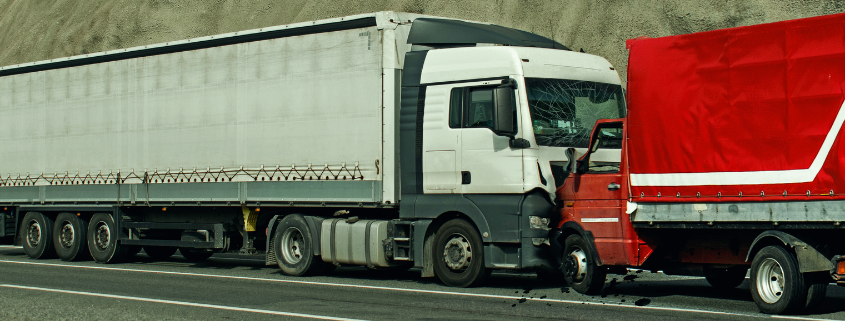
The jarring impact of a collision with an 18-wheeler is unlike any other passenger vehicle accident. The sheer difference in size, weight, and force often results in catastrophic consequences. On Alabama’s highways, from I-65 and I-20 to I-85 and I-10, these massive commercial motor vehicles (CMVs) are a constant presence. When a wreck occurs, the victims and their families are thrown into a situation that is not just physically and emotionally devastating, but also legally far more complicated than a standard car-on-car collision.
What Legally Defines a “Commercial Motor Vehicle” (CMV)?
A primary reason for the complexity is that the “truck” involved is often a CMV, which subjects it to a special set of federal laws. The Federal Motor Carrier Safety Administration (FMCSA) defines a CMV based on factors like:
- Weight: A vehicle with a gross vehicle weight rating (GVWR) or gross combination weight rating of 10,001 pounds or more.
- Passengers: A vehicle designed or used to transport more than 8 passengers (including the driver) for compensation, or more than 15 passengers (including the driver) not for compensation.
- Hazardous Materials: A vehicle used to transport hazardous materials in a quantity requiring a placard.
This means the driver and the company that owns the truck must follow a strict set of safety rules that do not apply to the driver of a passenger sedan, pickup, or SUV.
The Sheer Scale of Devastation: Catastrophic Injuries
A fully loaded semi-truck can legally weigh up to 80,000 pounds. The average passenger car weighs around 4,000 pounds. The physics of this mismatch is terrifying. When a collision occurs, the occupants of the smaller vehicle almost always suffer the most severe consequences.
While a typical car accident might result in whiplash, fractures, or lacerations, truck accidents commonly cause life-altering or fatal injuries, including:
- Traumatic Brain Injuries (TBIs)
- Spinal Cord Injuries and Paralysis
- Multiple and Compound Fractures
- Severe Burns
- Internal Organ Damage and Hemorrhaging
- Amputations
- Wrongful Death
The severity of these injuries immediately raises the financial stakes of the case, as the need for lifetime medical care, lost earning capacity, and other damages is substantially higher.
What Are the Key FMCSA Regulations?
An attorney with knowledge in this area will immediately investigate whether the driver or the trucking company violated any of these federal safety standards. Common areas of violation include:
- Hours-of-Service (HOS) Rules: These are strict limits on how long a driver can be on duty and drive without taking mandatory rest breaks. Driver fatigue is a leading cause of truck wrecks.
- Driver Qualifications: Companies are required to perform thorough background checks, ensure drivers have a valid Commercial Driver’s License (CDL), and conduct regular drug and alcohol testing.
- Vehicle Maintenance: Trucks must be systematically inspected, repaired, and maintained. Records of all maintenance and daily driver inspections must be kept.
- Cargo Securement: The FMCSA has detailed rules for how different types of cargo must be loaded, balanced, and secured to prevent shifting or spilling.
- Electronic Logging: Most trucks are now required to have Electronic Logging Devices (ELDs) that automatically record driving time, making it harder for drivers to fake their logbooks.
Who Is Liable? Identifying Multiple At-Fault Parties
In a standard car accident, liability is usually straightforward: one driver is at fault, and you file a claim against their personal auto insurance.
In a truck accident, there is often a long list of potential defendants. An investigation may reveal that several different parties contributed to the crash, including:
- The Truck Driver: For direct negligence, like speeding, distracted driving, driving under the influence, or violating HOS rules.
- The Trucking Company (Motor Carrier): The company is often liable for the driver’s actions under a legal doctrine called respondeat superior. They can also be directly liable for their own negligence, such as negligent hiring, poor training, or pressuring drivers to violate safety rules.
- The Shipper or Loader: If the cargo was improperly loaded, unbalanced, or not secured, the company that loaded the trailer could be at fault.
- The Maintenance Company: If the truck’s brakes, tires, or steering failed due to poor repairs, a third-party mechanic or maintenance shop could be liable.
- The Vehicle or Parts Manufacturer: If the crash was caused by a defective truck part (like a tire blowout or brake failure), the manufacturer could be a defendant in a product liability claim.
Identifying all responsible parties is essential to ensuring you can access the full compensation needed to cover catastrophic damages.
Uncovering the Evidence: A Far More Complex Investigation
Because of the federal rules and corporate structures involved, a truck accident investigation requires digging for evidence that simply does not exist in a regular car accident case. This evidence is often in the possession of the trucking company, which will not volunteer it. It must be demanded through a formal legal process.
Key pieces of evidence include:
- Event Data Recorder (EDR): The truck’s “black box” records critical data in the seconds before and during a crash, such as vehicle speed, brake application, and steering angles.
- Electronic Logging Device (ELD): This provides an objective record of the driver’s HOS compliance, showing if they were driving while fatigued.
- Driver’s Qualification File: This contains the driver’s employment history, training records, driving record (MVR), and drug test results.
- Dispatch Logs and Communications: Messages between the driver and the company dispatcher can reveal if the driver was being pressured to speed or drive past their legal limit.
- Maintenance and Repair Histories: These logs show whether the truck was kept in safe, road-worthy condition.
- Post-Accident Drug and Alcohol Tests: The FMCSA requires these tests for the driver after any serious or fatal accident.
This evidence must be secured immediately through a spoliation letter, which legally demands that the company preserve all records.
How Does Corporate Liability Change the Case?
You are not just dealing with an individual driver; you are dealing with a sophisticated business. Trucking companies and their insurance providers often have “rapid response teams” of investigators and lawyers who are dispatched to the scene of a major accident—sometimes before the police have even finished their report.
Their goal is to control the narrative, gather evidence favorable to them, and limit their financial exposure.
Furthermore, the company itself can be held liable for its own corporate negligence. This includes:
- Negligent Hiring: Hiring a driver with a known history of reckless driving or drug use.
- Negligent Training: Failing to properly train a driver on safety procedures or the specific truck they are operating.
- Negligent Retention: Keeping a driver employed after they have committed multiple safety violations.
- Negligent Entrustment: Allowing a driver to use a truck that the company knew (or should have known) was unsafe.
Fighting Corporate Insurance Companies
Passenger car claims are handled by personal auto insurers. Commercial truck claims are handled by corporate insurers that provide policies with much higher limits—often $1 million or more. Some large trucking companies are even “self-insured,” meaning they pay claims directly from their own assets.
These insurers are not interested in a quick, fair settlement. They employ experienced claims adjusters and defense attorneys whose entire job is to minimize payouts on multi-million dollar claims. They will use any tactic to delay, deny, and defend the claim, hoping you will get frustrated and accept a lowball offer.
The Vital Role of Accident Reconstruction
Because the physics of a truck wreck are so different, expert testimony is often required. An accident reconstructionist with experience in commercial vehicle dynamics can analyze all the evidence to explain what happened.
They can answer key questions like:
- How fast was the truck really going?
- Given the truck’s weight and speed, how much stopping distance did it need?
- Was the driver able to see the other car from their “no-zone” blind spots?
- Did a mechanical failure, like brake fade, contribute to the crash?
This expert analysis is often presented using powerful demonstrative evidence.
What Types of Demonstrative Evidence Are Used in Truck Wreck Cases?
To explain a complex truck accident to an insurance adjuster or a jury, words are often not enough. Visual aids are needed to make the technical data clear and compelling.
Common types include:
- Black Box Data Analysis: Charts and graphs showing the truck’s speed, braking, and steering inputs.
- 3D Reconstruction Animations: A scientifically accurate, computer-generated animation showing exactly how the collision occurred, second by second.
- Hours-of-Service Timelines: A clear timeline showing how a driver’s logbooks prove they were dangerously fatigued at the time of the wreck.
- Medical Illustrations and Models: Detailed images or physical models that show the specific, severe injuries a victim sustained.
- “Day in the Life” Videos: A short documentary showing how a victim’s catastrophic injuries affect their daily struggles with basic tasks.
What Is the Statute of Limitations for a Truck Accident in Alabama?
In Alabama, the statute of limitations for filing a personal injury lawsuit, including one for a truck accident, is generally two years from the date of the accident. This is established by Alabama Code § 6-2-38.
If you fail to file a lawsuit within this two-year window, the court will almost certainly dismiss your case, and you will lose your right to seek compensation forever. While two years may sound like a long time, it passes quickly while you are recovering from injuries. Building a complex truck accident case takes many months, so it is vital to contact a knowledgeable attorney long before the deadline approaches.
What Should You Do After a Commercial Truck Accident in Alabama?
The steps you take in the moments, days, and weeks after a wreck can have a major impact on your health and your legal claim.
- Call 911 Immediately: Report the accident and request emergency medical services, even if you feel “fine.” Some serious injuries have delayed symptoms.
- Document the Scene (If Able): If you are not seriously injured, take pictures and videos with your phone. Get photos of all vehicles, the truck’s DOT number and license plate, skid marks, and the surrounding area.
- Get Driver and Company Information: Get the truck driver’s name, license number, insurance information, and the name of the trucking company they work for.
- Identify Witnesses: Get the names and contact information of anyone who saw the accident.
- Seek Medical Attention: Go to the hospital or your doctor for a full evaluation. This creates an official record of your injuries.
- Do NOT Give a Recorded Statement: The trucking company’s insurance adjuster will likely call you within hours. Be polite, but do not give a recorded statement, agree to sign anything, or accept a quick settlement offer. Their only goal is to get you to say something they can use against you.
- Contact an Experienced Truck Accident Attorney: The trucking company already has its legal team working. You need someone on your side to level the playing field, preserve evidence, and protect your rights.
Holding Negligent Trucking Companies Accountable in Alabama
A collision with a commercial truck is a complex legal battle involving federal laws, corporate defendants, and unique evidence. In Alabama, the unforgiving contributory negligence rule adds another high hurdle for victims. The legal team at Turner, Onderdonk, Kimbrough & Howell, P.A. is dedicated to helping injured Alabamians navigate these claims. We investigate trucking companies, analyze federal compliance records, work with reconstruction experts, and build powerful cases designed to counter defense strategies unique to our state.
Please call us at (251) 336-3411 or contact us online to schedule a free, confidential consultation. We can discuss the specific facts of your case and explain how we can help you fight for the resources you need to move forward.



Leave a Reply
Want to join the discussion?Feel free to contribute!